Thursday, February 26, 2004

WHAT BOOK ARE YOU?


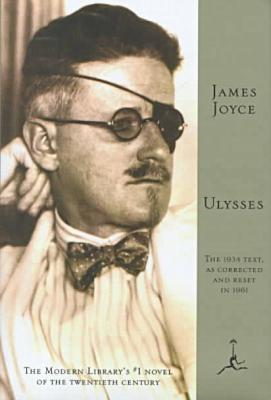
You're Ulysses!
by James Joyce

Most people are convinced that you don't make any sense, but compared to what else you could say, what you're saying now makes tons of sense. What people do understand about you is your vulgarity, which has convinced people that you are at once brilliant and repugnant. Meanwhile you are content to wander around aimlessly, taking in the sights and sounds of the city. What you see is vast, almost limitless, and brings you additional fame. When no one is looking, you dream of being a Greek folk hero.
         
(From Blue Pyramid, check it out!)

Wednesday, February 25, 2004

What's in YOUR pile?

you probably have a pile like this....by your bed, by the chair where you usually read, on the coffee table, or all of the above and maybe more.  my pile was looking at me the other night when i went to bed, so i thought i'd make an anecdotal note of what's in it.  this is not a TBR pile, this is an accumulation of stuff to dip into in short pre-sleep bursts, or when i wake up in the middle of the night, or take into the bathroom with me.  my TBR pile is elsewhere, much of it only on paper until requested from the library. so, the pile, in no particular order:

Red Suitcase, Poems   -  Naomi Shihab Nye
Fuel, Poems  -  Naomi Shihab Nye
The Mother Tongue, English and How It Got That Way -       Bill Bryson
The Wild Within, Adventures in Nature and Animal Teachings -  Paul Rezendes
    
White Pine, Poems and Prose Poems  -  Mary Oliver
Poets Against the War -   Ed. by Sam Hamill
Cultivating Delight, A Natural History of My Garden  - 
                                                Diane Ackerman
Island Wise - Lessons in Living from the Islands of the World -  Janis Frawley-Holler
Sister Emily's Lightship and Other Stories  -  Jane Yolen
The Writer in the Garden  -  Ed. by Jane Garmey
Ruined by Reading, A Life in Books  -  Lynne Sharon Schwartz

Comforting books, these, in the middle of the night. I'd love to know what's in your pile, it's an interesting keyhole glimpse into a person.

FROM The Book Lover's Cookbook

     "Fiction isn't an ivory tower.  It isn't a dodge from real life.  It can be where we most completely encounter 'real life.' 
     Millions knew that slavery was wrong.  Thousands had heard escaped slaves speak movingly of what they had suffered.  Their memoirs were widely read.
      Harriet Beecher Stowe drew upon some of these memoirs in Uncle Tom's Cabin.  In her fictional story -- acknowledged to be wooden, wordy, and poorly plotted -- she hammered away at the separation of families.  Thousands of fathers and mothers, reading this book aloud by their firesides, looked down at the listening faces of their own children and knew that they could no longer be indifferent to slavery.
      When he met Stowe, President Abraham Lincoln greeted her as 'the little woman who wrote the book that made ths great war.'  He ascribed the Civil War to the effect of her book."
                      (Susan Shaughnessy,  Walking on Alligators)

Sunday, February 22, 2004

ABSOLUTE FRIENDS - Part 1 of 3

Over the past three years of this administration I could increasingly describe my political feelings as cynical, sad and paranoid.  John le Carré clearly shares those feelings, both about the U.S. administration and his country's participation in our foreign wars and relations.  Le Carré, however, has a powerful vehicle for the expression of his perceptions and feelings - his writing.  In a recent interview with the NYT he calls the book "a fable, to illustrate the dangers of what Britain and the U.S. have committed us to:  a virtual crusade in which we're exporting democracy by military means...The comedy in this - if there is a comedy - is that the lies that have been distributed are so many and so persistent that arguably fiction is the only way to tell the truth."

It's hard to find an objective review of this book anywhere; its very subjective tone brings out the politics in everyone.  I waited until I'd read it to read the reviews, and my advice to any prospective readers would be to do the same.  The storyline is convoluted and difficult to summarize.  Joan Smith in The Independent does a good job without too much editorializing.  In brief, it's the story of a complicated friendship between two men, one British, the other German, based on political/social ideology, yes, but ultimately on something far more.

(Continues in Part 2)

ABSOLUTE FRIENDS - Part 2 of 3

Both Ted Mundy and Sasha, who meet in Berlin during the radical sixties, are outcasts and misfits in their native worlds, a fact which draws them to one another and leads to their becoming each other's "secret sharers."  They share political street action in their youth, Cold War spy games for much of adult life, then bewildered searching after the fall of the Berlin Wall.  They come together for their last adventure in current times, our times, and a final violent confrontation with the forces they loathe, forces now personified by the global corporatization of the world.  The more literary of the reviews frequently mention Joseph Conrad, and I think rightly so.  Ted Mundy's persona, with his colonial past, his longing and seeking for identity, certainly leads us in that direction.

I've now read reviews calling this a brilliant book, a clumsy political polemic, le Carré's best book, his latelife senile rant, etc. etc.  Michiko Kakutani in the NYT is perhaps the nastiest, using the quote from the book that turns up in every single review to make one of her points: "To make matters worse, many of the people in the later sections of the book no longer converse but simply trade angry political screeds: 'it was an old Colonial oil war dressed up as a crusade for Western life and liberty' one character says of the Iraq war, 'and it was launched by a clique of war-hungry Judeo-Christian geopolitical fantasists who hijacked the media and exploited America's post-9/11 psychopathy.'  To this reader that quote sounds like a fairly accurate description of the Iraq war, not an "angry political screed."

(Continues in Part 3)

ABSOLUTE FRIENDS - Part 3

Both G and I found this a totally compelling read, although we're still arguing about the ending.  G thinks it works, I agree with The Guardian's reviewer, who says "The ending of the novel is problematic not because it is unlikely, but because it is both over-determined and gratuitous...There is nothing wrong with the event itself, but it takes place in an insufficiently prepared context."  I have no problem with the political viewpoint, which I think is best briefly stated in this quote: "that (in the world today) warfare is the extension of corporate power by other means," but I did feel entirely unprepared for the ending.  Finally, however, I'm entirely in agreement with Steven Alford in the Houston Chronicle when he says:  "the ultimate take in this novel is not the fate of the world but the fate of a friendship.  In le Carré's world, the worst that can happen is not death but betrayal...Absolute Friends is le Carré's best work in years and suggests that he's finally solved the puzzle of how to integrate the world he knew so well into one in which the enemy is not political ideology but economic globalization." 

Here, at the BookReporter, is the closest thing to an objective review I found, plus an excerpt from the book.  The selection is from the opening chapter and you may need to have quick access to your bookstore or library.  It will suck you right in and make you want more.

Tuesday, February 17, 2004

i really AM reading Absolute Friends,   i promise.  and if we get a snow day here (possibility tonight/tomorrow morning) i will finish it and post about it.  i have not had much reading time lately, and this is not a book to blow through quickly.  it's tricky and complicated, and i'm not always sure i understand what's going on.  i have faith that all will eventually be made clear. after all, this is not my first John le Carré novel! 

so, here's hoping for five or six inches of Nature's way of saying "curl up, drink hot chocolate, READ." 

Tuesday, February 10, 2004

EAT YOUR HEARTS OUT

errr, sorry about the title pun.   but really kids, look what i found at the library this afternoon when i popped in to pay my fines:  The Book Lover's Cookbook, Recipes Inspired by Celebrated Works of Literature and the Passages that Feature Them.  how delicious is that?  books and food, gifts of a forgiving deity of some sort.  you can get a good idea of how much fun this cookbook is right here, its very own website.  i've been resisting buying any new cookbooks, but this one may prove irresistable.  the pages are sprinkled with literary quotes, the passages make me want to do nothing at all but read.  oh, and eat.

the painting above, by Karoly Ferenczy, is the book's cover art.  oh to be transported into it.  the painting, that is.  a summer afternoon, companionable shared reading, after a light repast.

Sunday, February 8, 2004

Mystery Marathon, Part 1

continuing with my mystery jag, a few words about Blacklist ,  Paretsky's latest V.I. Warshawski caper.  it's longer than it probably needs to be, but engrossing.  i never understand everything in a V.I. mystery, and this one is no different.  i mean, i understand it when it's happening, but i can't keep it straight all the way through.  this one is about rich folk on Chicago's Gold Coast, some of whom have murky pasts connected to Communism, and HUAC investigations.  a reporter who's been working on events and people from this past time ends up dead in a pond on a suburban estate; a young Egyptian whose visa has expired disappears, inspiring panic in the hearts of Homeland security guardians (the story takes place soon after the Patriot Act goes into effect). 

V.I. finds the reporter's body while on a totally different errand and soon becomes entwined in the whole mess.  the book gives Paretsky a good vehicle for many nasty digs at Homeland paranoia and shots at both McCarthy era blacklisters and today's  Patriot Act misplaced zeal.  there's really way too many plot lines and the separate lines tangle together like snakes, causing an impatient reader like G to give up somewhere in the middle and skip to the end.  i like how Paretsky always brings politics into her mysteries, in one form or another.  so i read it all.  and enjoyed it quite a lot.

Mystery Marathon, Part 2

it was cold and blustery today, so we hung out at home and read.  i breezed through Susan Wittig Albert's latest China Bayles herb-themed mystery:  A Dilly of a Death .  what can i say.  i love them because they're full of herb lore, good recipes, and take place in my favorite place on planet Earth, the Texas Hill Country.  they're featherweight and trivial, yes, you're right.  but fun.  this one is murder in the pickle factory, with lots of bad pickle jokes and puns.  i never even knew there was a genre of pickle jokes.  (what's big and green and swims in the ocean?  Moby Pickle!!) dill, of course, is the herb used to make pickles, thus the title.  take note, lots of interesting recipes involving dill. including a delicious sounding Dillied Beer Bread.

G just finished Absolute Friends,  so i'll start that next. she calls it a very accurate description of the manipulation of events surrounding the war.  disheartening but not surprising.  she was very bummed out through the latter half of the book.  the way one feels after reading alternative news sources, perhaps.

Saturday, February 7, 2004

LOOKING FOR YOUR OWN RING?

many journal writers/readers are LOTR fans, both the books and the films.  or maybe mostly the films.  how many of us have actually read The Hobbit   and all three volumes of LOTR, i wonder? (really, 'fess up, i'd love to know.  i'll start by telling you that, yes, in my 20's, i did indeed read all of these books.) anyway, this morning i have been reading a lot of political/environmental stuff all over the Internet.  and, just in time to keep me from swallowing ground glass, i found this little article on alternet.org.  a meditation on LOTR (films) as Dating Manual.  nothing i need for my personal life, mind you, but an amusing read nonetheless.  at least, an antidote to reading about global warming and rape of female military personnel, by male military personnel, in Iraq.

Thursday, February 5, 2004

Odds 'n Ends, Part 1 of 3

as my sidebar and earlier entries show, i've been on a mystery tear lately.  actually, i'll freely admit that mystery is my favorite genre. things coincided badly: because i was mid-Blacklist,  G grabbed John Le Carré's Absolute Friends  before i could get to it.  this is going to mean a lot of library fines.  she has so little time to read.  but she's loving it. 

things i said i'd talk about:  House of Sand and Fog.  pretty good movie, all things considered.  really good casting, good acting, especially from Kingsley.  a little too much ponderous pompous camera panning of fog rolling in over the hills (how subtle can they be?), WAY too much crashing swelling pompous music all through the film, something that always annoys me.  a good soundtrack can make a film, a bad one seriously detracts. the story is just as ghastly as it was in the book, and i have to say i felt far more emotionally involved by the movie than the book. as the film was moving towards its grisly end, G shuddered and whispered to me "this is unbearable."  all i could say was "it's going to get worse." i'd recommend seeing it, on the basis of Ben Kingsley's performance alone.  he's nominated for Best Actor, so if you're an Oscar groupie you might want to see what you think.

Odds 'n Ends, Part 2 of 3

Drop City   - okay, let's get this over with.  i've read two or three books since this one, so, you know, it fades.  despite the nekkid people on the cover, it's not replete with drug-induced hippie group-sex orgies.  i'm sorry, but no. 

i was actually pretty riveted by this book while i was reading it, despite its length.  but the further away from it i get the less i think of it.  i'm disappointed in the two novels i've read which were nominated for the National Book Critics' Award.  how hard are they looking? 

the story,  in a small (maybe filbert) nutshell:  Drop City is a late 1960's/1970 commune in northern CA, where things are becoming less than serendipitous.  too many people, too little plumbing, woods filling up with shit.  the health department is evicting them from the ranch where the commune is located, bulldozers are on their way to knock down the raggedy collection of buildings on the property.

 (continues in Part 3)

Odds 'n Ends, Part 3

the novel moves between this group and their problems, to another group of corporate American life dropouts - hard drinking  homesteaders, trappers, bush-pilots, tough examples of the Last American Men (and one quite likeable woman) in the wilderness of Alaska.  as you may guess, the two groups are destined to meet.  Norm, commune founder and father-figure, has inherited land and a cabin in this wilderness from his uncle.  the hippies acquire a bus (not quite Merry Pranksters, but On The Bus) for most of them to travel in, and set off in a convoy up thru the Northwest to Alaska.  someone (was it someone well known?  was it my writing teacher in college?  can anyone help me out here?) said if a gun appears in the story it damn well better get used before the story ends.  guns appear.  guns get used.  not, as you might expect, in a showdown between hippies and American Men, but in a violent confrontation between two of the Alaskan frontiersmen.  this situation takes over the latter part of the novel, after it culminates the story just kinda peters out.  everyone loses interest.

Boyle is said to be a satirist, this is called, by many reviewers, a satire.  i don't think so.  ( Tom Wolfe writes satire: A Man in Full, Bonfire of the Vanities.Drop City  tells its story through a small cast of characters within the larger groups of stereotypes, but the story lacks the wit, the sharp social knife-edge of true satire.  i read it quickly and with enjoyment, but, as after eating doughnuts, i wondered if it was really worth it.  you can read the first chapter here, and see if you're hooked.  if so, it's out in affordable paper now.